
unpaid internship
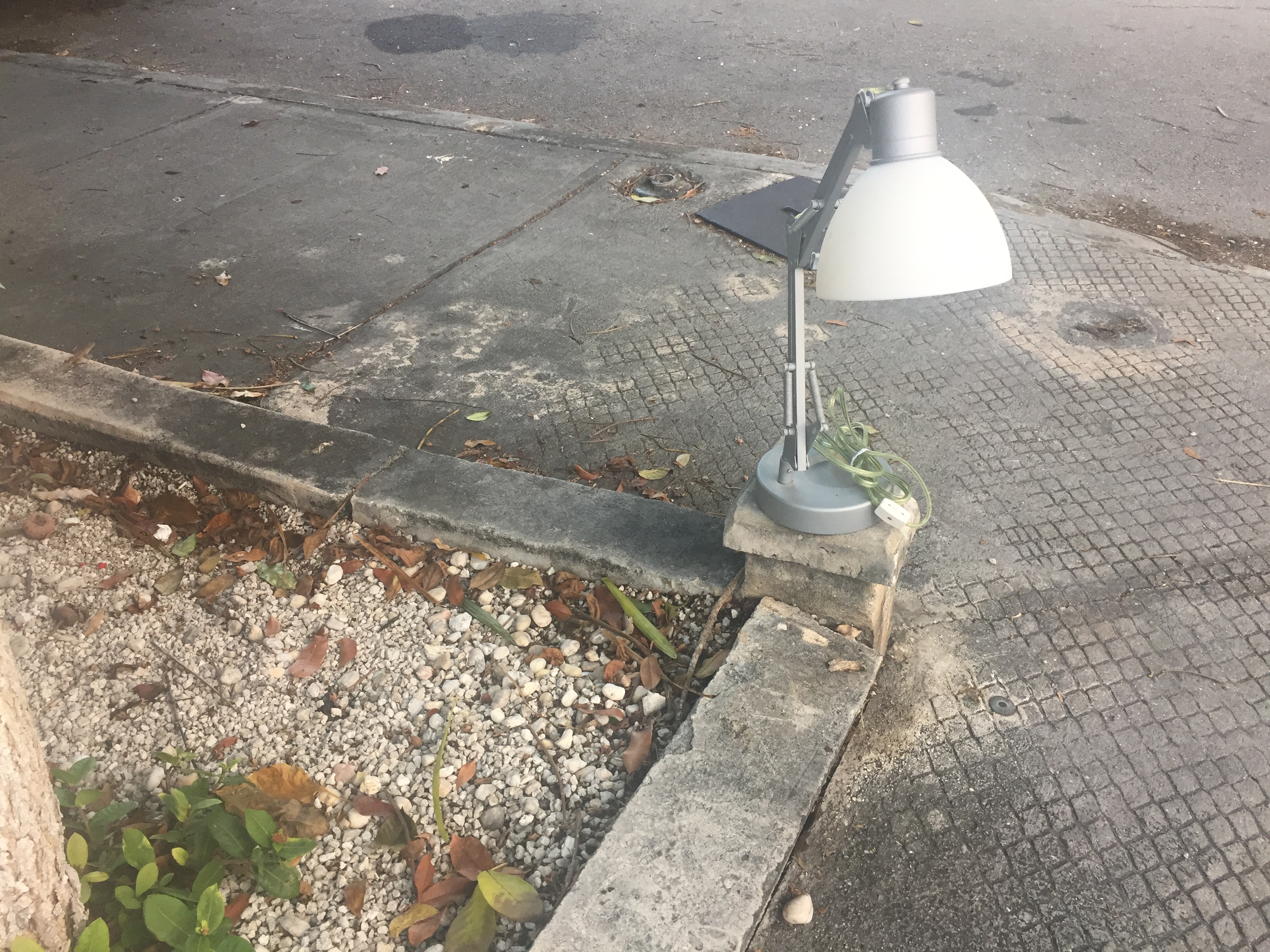

‘(sponsored content)
‘A Place for Followers of the Gray Witch, Roki,’ is, admittedly, a venue with limited appeal but, for followers of the Gray Witch, Roki, it is certainly a must-see. It is difficult for the author, as somebody who does not subscribe to the teachings of nor follow the Gray Witch, Roki, to describe exactly how ‘A Place for Followers of the Gray Witch, Roki’ is appealing to its audience, per se, but, if you’re a follower of the Gray Witch, Roki, and you enjoy seclusion and forested locales, then it is likely a place for you.
Card-carrying members of the followers of the Gray Witch, Roki, (and, here, the author remains unsure as to whether actual membership cards exist or if it is simply a turn of phrase) are granted free access to ‘A Place for Followers of the Gray Witch, Roki,’ though space is quite limited and all potential visitors are asked to call ahead in order to arrange accommodations. The owners ask that followers of the Gray Witch, Roki arrive in groups no larger than three.
(sponsored content)’
“Ah ha!” an old woman screams, leaping out from behind a graceful sycamore and stabbing me in the shoulder with what looks to be a ceremonial dagger of some sort.
“What?!” I scream back, before lapsing into comfortable unconsciousness.
When I wake I find myself tied to a chair in a dimly lit room that smells like dust and caramel. A short burst of static draws my attention to the gray-green lump of my backpack on the floor to my left. My shoulder aches under a bandage.
“Hello?” I ask and then, lowering my voice to a whisper, “Radio-person, can you hear me?”
The bag spews another second or so of static but offers nothing further. I wonder if my radio understands enough about me to know I would rather not deal with the police, or if it knows enough about this situation to call them anyway. I wonder, maybe for the first time, how much it knows about me at all.
I shake in the chair, to see if anything about my bindings will come lose, but several bells tied into the rope behind me ring out and I hear footsteps approaching the door. The woman steps into the room, smaller and frailer than I remember from the stabbing. She wears an apron and yellow, rubber gloves, neither of which suggest a particularly positive outcome to this situation.
“Found yourself cut off from Roki, have you?” the woman asks, “Must have something to do with these…”
She points to the ceiling, to the cryptic posters tacked to it. They seem to be a hodgepodge collection of runes and occult symbols, though some simply have the name ‘Roki’ written and crossed out in thick, red ink.
“I’ve been at this for some time, young man, do not underestimate my cunning.”
She pauses and I try to think of something to say that won’t get me stabbed again.
“Curious,” she continues, “Have you no hexes for me? No curses to spit in my face?”
“I…”
“Ha!” she yells, tearing off her apron to reveal a tangled collection of amulets and talismans hanging loosely about her chest, “I bet my life you have no magic so powerful as to…”
“I’m not…”
“Not a follower of the Gray Witch, Roki, eh?” she asks, “Think I haven’t heard that one before? And how did you find this place, exactly?”
“The…”
“The book!” she cries, “The advertisement! The bait to my little trap. Tell me, oh innocent tourist, what about ‘A Place for Followers of the Gray Witch, Roki’ appealed to you? That advertisement was carefully crafted to appeal only to followers of the Gray Witch, Roki which means a follower of the Gray Witch, Roki you must be!”
“Who…”
“My sisters and I have devoted our lives to hunting followers of the Gray Witch, Roki. Patricia hunts the strongest, Clare hunts the most clever, Eliza hunts the most faithful, and I hunt… the rest…”
She pauses so that I can respond.
“You must get a lot of guys like me, then.”
“Much like you, yes,” she says, “And now, we… what?”
“I didn’t…”
“What are you doing?” she screeches, cupping her hands over her ears, “How have you… the talismans! Stop this!”
I shuffle the chair back as she stumbles forward and draws the dagger from her waistband. She screams again and presses her arms to her head.
“Stop!” she cries, “I surrender, I-”
The woman collapses onto the floor, the dagger skittering across the linoleum to my feet. It is very quiet, for a moment, and in that quiet I am eventually able to make out a subtle, whine.
“Traveler,” the voice on the radio startles me, “I’ve done something cruel to the woman’s hearing-aides.”
“Thanks,” I say, trying to scoop up the dagger with my bound feet.
“Wait,” it says, and it sounds as though it may be struggling to suppress a chuckle, “I also made a call.”
The door opens behind me again and I smell… smoke.
-traveler
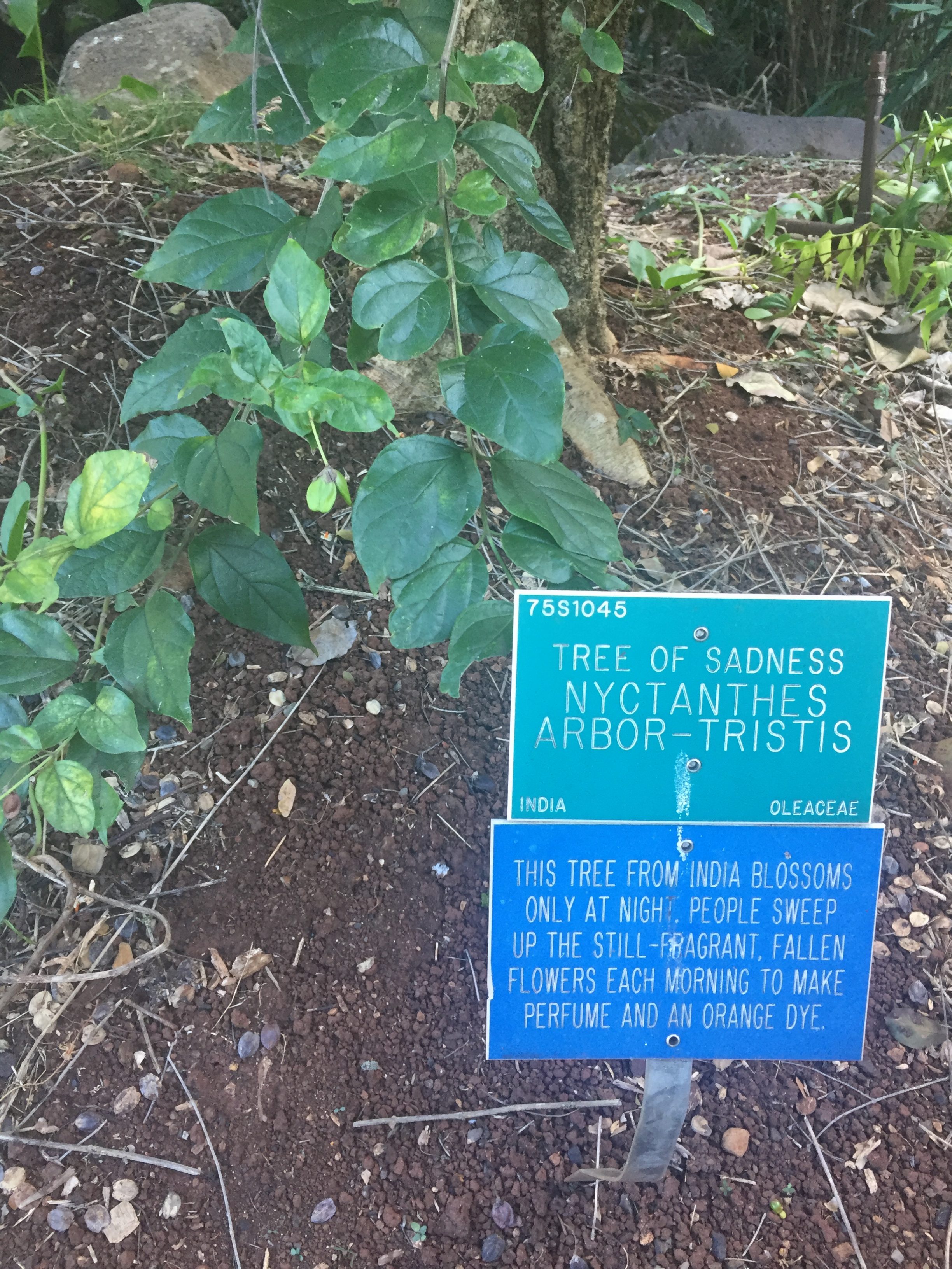
‘Visible for miles around, the ‘Eye in the Sky’ is a vestigial component of the region’s old fire alert system. No single part of the hike is difficult, but the trek is complicated by a system of ridges that make for an extended approach. Reaching the ‘Eye in the Sky’ and returning is difficult in a day- most literature recommends spending the night and waking for the sunrise.
Most literature also includes a caveat- that campers should not come alone.
A little research reveals a series of scattered incidents at the site, usually an unpleasant run-in between a family and a crazy- never the same family, never the same crazy. The crazies range in age and background but few have a history of erratic behavior. They claim, unanimously, that the ‘Eye in the Sky’ is to blame for their brief, psychotic break but are, also unanimously, unable to explain how.’
The author does not say whether he reaches the ‘Eye in the Sky’ alone and he does not say whether he spends the night. Can I trust that he would warn me of danger, as he did at the rest stop so many months ago? Is the passage, as written, warning enough?
The hike is hard for me, but, then, I am carrying everything I own on my back and, also, I am terribly out of shape. I think of the stranger often as I follow the path. It’s a narrow thing, occasionally muddled by overgrowth or a fallen tree but never unclear. There are no signs past the trailhead, only the sure footfalls of those who came before me.
It is nearly night when the tower rises ahead of me on the hillside. I find a soft place in the ground and build my camp there. I am on the lookout for crazies early in the process- the author does not always offer a full warning in cases like this, but his printed word is often to the point. If he’s willing to spare a few sentences to mention trouble at a site, it’s likely worth my time to consider it.
My ratty tent manifests and swallows my bag as the last gray strands of twilight pull away. I find my flashlight and start toward the tower, now a dark silhouette marking the invisible precipice beyond.
I am not the only one spending the night, here. I spot a couple’s tent near the base of the ‘Eye in the Sky’ and a family huddled around a small, illegal campfire. I sense their eyes on me and I know they, too, have heard rumors of this place’s particular dangers. I try to look unimposing and, in doing so, trip on the stairs to the base of the tower. Could be that helps my case- could be it makes me look drunk.
The inside of the ‘Eye in the Sky’ contains the cigarette butts and broken bottles necessary of a place like this, but the refuse keeps to a corner and moonlight leaking in from several barred windows is enough to climb the stairs by. There is no guard rail, no qualifying sign regarding the risks of ascending the tower. Places like this are becoming rare- they sit on budgetary back-burners until some idiot manages to break their neck and sue. Places like this are being made safe, given time.
The view from the top of the ‘Eye in the Sky’ is staggering. Little midwestern towns twinkle and smoke in the darkness below, separated by the vast, dark forest that winds its way up this hill, up to the very base of the tower. As is often the case when faced with stars, I am struck by an uncomfortable sense of oneness, a feeling that sinks in my stomach and pools in the soles of my tired feet. It is terribly quiet as I try to understand my place in a world that sprawls out of sight in all directions.
I am turning away when movement draws my attention to the woods. A figure moves along a path toward the base of the tower, not the common path, the path I walked in on, but a separate, almost invisible path. A path that is made visible only by following the thing that walks it.
The figure is fast and it walks carelessly. It is pale and dressed in light clothes, appearing to glow under the moonlight, a roving oblong speck, ecstatic in the darkness. It is a long ways a way, but its strange march fills me with a fear that is quite unlike the dread oneness from before. This is a fear that pricks like needles in my hands and my back. I scratch nervously at the tower wall and watch- the thing is still quite far and there is plenty of time for it to turn another way, or to reveal itself to be something less fearful than I imagine.
But it does neither.
The thing does not become comfortingly clear in its approach, but remains stuttering and fast and vague. I find myself inching away from the window without realizing, stepping forward again when I nearly lose sight of it. At times, I think I see waving arms, as though it is engaged in some sort of strange dance. Other times I see a head, lolling on a limp neck. Each time I try to focus on a feature, it gives way to another, though I come away with the sure afterimage of a human figure and a feeling like a high-pitched noise. It is undoubtedly coming here, to this place, from wherever it was before.
I step to the other side of the tower and look down at the family’s little fire, at their forms huddled around it. Further along I see the couple’s tent, lit from the inside by a lantern. I rush back, expecting the strange thing to have vanished but see that it has only grown closer, that its troubling movements have grown wilder. It seems like it could be skipping now, that its legs skip while the rest of its body hangs loosely.
This is no drunk, it is no normal person or thing. I am thankful for the relatively few times in my life that I have looked upon something and been sure of its malevolence but this is one of those times. The prancing white figure means harm- some buried instinct, some ancestral fear tells me this is the case and it is all I can do to think of the others as I begin to flee.
I am hardly out the front of the tower, having nearly become the inevitable broken-necked idiot on the stairs, before I shout out a warning to the campers:
“Something’s coming this way! We all need to get out! It’s almost here!”
The father of the family reacts immediately, he dives into their tent as I gesture toward the path of the thing, the thing that remains out of sight. The man reemerges with a baseball bat and the child screams:
“It’s a crazy man!”
I planned to run anyway.
-traveler
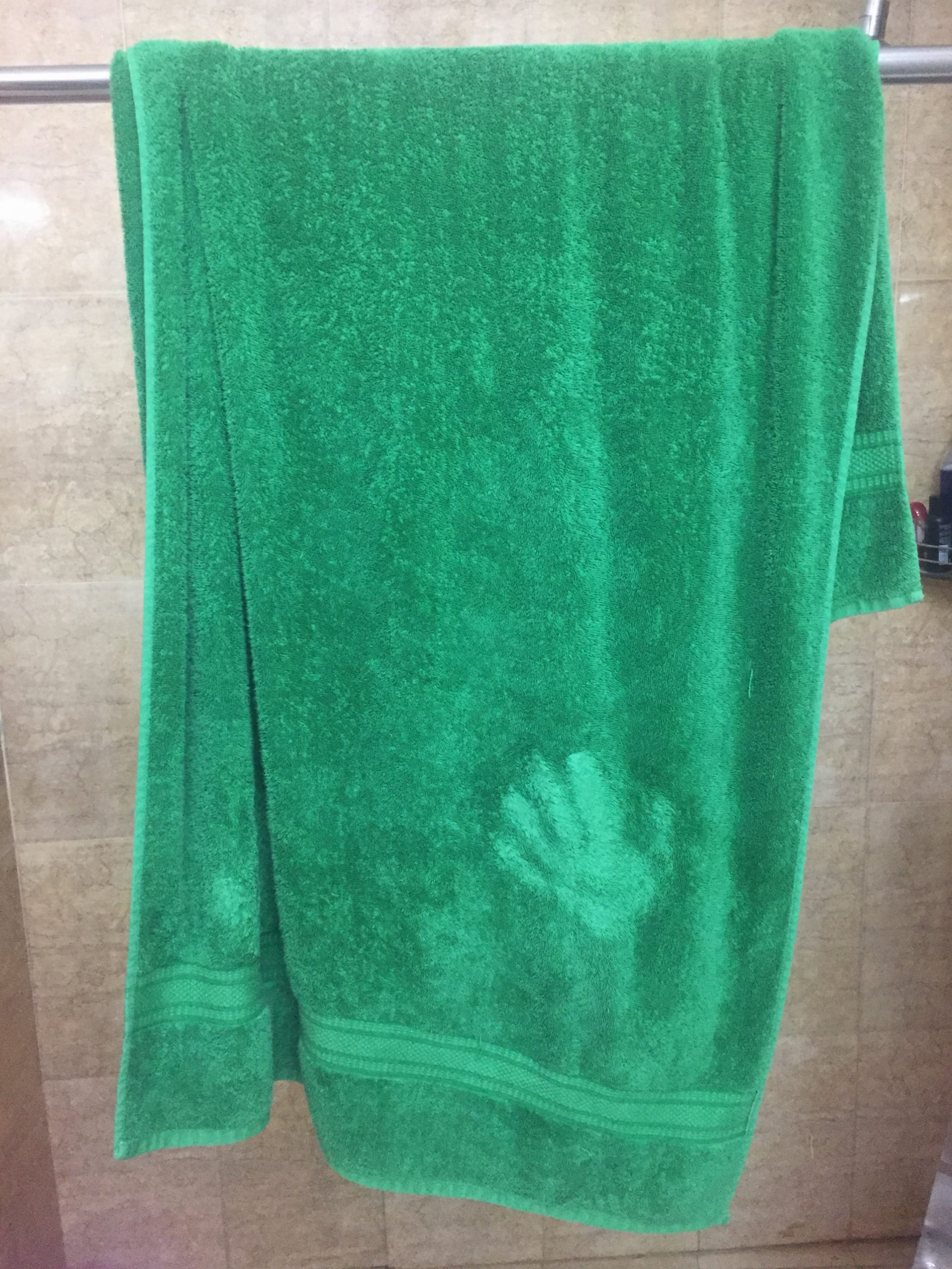
“This is the Taffy Well,” our guide says, “I’m sure you can imagine it takes quite a bit more power to pump taffy up through those pipes than, say, water or anything like that. We have to get the pump engines special-made from partners in Germany.”
Below us, on the factory floor, a series of pipes shake and twist. One segment seems to consist entirely of thick rubber tubes, expanding and contracting cartoonishly. Steam bellows out of the machine at 30 second intervals and the engine powering it roars endlessly.
I raise my had and people groan.
“Yes, sir? Another question?”
“Yeah, sorry. Where is the taffy coming from?”
“I didn’t catch that, sir.”
“You said you’re pumping the taffy ‘up,’” I shout over the machine, “Where are you pumping it up from?”
“Oh, from underground,” he says, “The next room…”
“Underground where?” I ask, ignoring several glances, “From storage or something? It’s not actually like a well, is it?”
“I can’t hear you, sir. Let me get back to that in the next room.”
I glance down at the squirming pump again and see a factory worker frantically moving between the pipes with a stethoscope-like tool. After several stops the woman leaps back and seems to radio in several other employees, all of whom approach the spot cautiously and take turns with their own stethoscopes. They gesture wildly to each other, their words lost in the noise of the engine.
“Sir!” the guide is signaling from the door, “We’ll need to move on!”
‘‘Schulz Taffy’ is an American standard, a candy that is unbound by region. It is the universal bottom-shelf treat, boasting several vague flavors at a quarter-a-piece or five-for-a-dollar. Few people would claim ‘Schulz’ as a favorite. Fewer still would recall ever buying it. ‘Schulz Taffy’ is a candy made for sitting in bowls at reception desks. It sinks to the bottom of trick-or-treat bags, consumed as an afterthought in late November.
In September of 2008, ‘Schulz’ drew media attention for adding a sixth, ‘mystery flavor’ to their traditional five. Contrary to similar marketing tactics, the company apparently did not plan to reveal the basis of the new flavor at any point and grew defensive when customers reached out with guesses via social media. ‘Schulz’s’ CEO would later remind the digital masses that the company, at no point in the past, had ever named the first five flavors and that, for reasons unknown, seemed to comfort the dubious customers. Many questions remain regarding ‘Schulz’ as a company and a product but, considering the nature of this book, the most relevant is, perhaps, why would a company like ‘Schulz Taffy,’ with such a keen interest in secrecy, offer free, factory tours?’
The next room is much quieter and the catwalk is encased in glass. The floor below is nearly empty, an absurd amount of space for what appears to be a single machine. A pipe leads from the south wall and enters a cube, maybe 6’ tall and shining, obsidian black. Another pipe leaves the machine and enters the north wall. Neither could be more than a few inches wide.
“This is where we filter out the impurities,” the guide says and he checks his watch. “The next room is real treat…”
“What?” I ask.
“Sir?”
“What impurities? And all the taffy runs through there? What is that thing?”
I point to the cube and see the pipes now run from east to west. The north and south walls show no signs of ever once having a fixture.
“Did anybody see that move?” I ask. I try a chuckle to ease the atmosphere. “I could have sworn those pipes moved east to west a second ago.”
“The filter was designed to use gravity to its advantage,” the guide says, “It means ‘Schulz’ consumes less power, and provides for a greener world.”
The cube is now suspended in the air by pipes running from the ceiling and draining into the floor. I watch it carefully for several seconds.
“Sir,” the guide says, “I’d ask that you not touch the glass.”
“I’m not-”
“Shall we continue?”
Our guide leads us down a hallway and through several swinging doors. We pile into an elevator and, as we ascend, he hands out ‘Schulz’ branded ear plugs.
“Things are going to get noisy again here in a moment,” he says, “Don’t be alarmed!”
Finally, as the elevator door opens, I see my own concerns reflected in the faces of those around me.
“The process of pulling the taffy,” our guide yells, “releases a variety of gases from hidden air pockets. It’s funny, what people say they hear in the noises- bird calls, whistling-”
“Screaming,” I say, “It’s screaming.”
A great wad of taffy is suspended in the room, pulled and folded by thick, rotating arms. The air is warm and thick with sugar and screaming.
“Screaming, huh?” the guide says, uncomfortably, “That’s a new one…”
“Surely not,” I insist, “That doesn’t sound like birds- it sounds like screaming. Like people screaming. Doesn’t it sound like screaming?”
One of the children on the tour cautiously nods and I point to it as a sort of confirmation.
“I could see how a person unused to screaming might think that,” the guide calls, “But I wouldn’t personally draw comparisons between the two sounds.”
The screaming is interrupted for a few seconds by a series of hoarse coughs but quickly picks up again.
“See?” the guide says.
“See what?” I yell, losing my temper, “It coughed and started screaming again.”
“It’s taffy, sir,” the man explains, “It can’t cough or scream.”
“Normally I would agree with you,” I say, “Taken out of context I can see how I would be the crazy one, here but given we’re standing in a room full of screaming taffy-”
The screaming stops, suddenly, as the machine finishes its cycles and plops the monstrous taffy into a vat. A lid lowers to seal the candy inside and the machine begins to piece it out onto a conveyer belt that leads through a window into another room.
“Sir!” our guide exclaims as I dig my ear plugs out, “Sir you must keep those in for safety!”
Without the plugs I can hear the taffy’s muffled screaming from inside the vat. I shake my head and gesture to the others to follow suit and they look nervously between us.
“It’s still screaming in there!” I shout.
“Please, everyone, this man is clearly upset. Do not remove your ear plugs until we are safely-”
“I feel fine!” I yell, “There’s no noise but the screaming in the machine!”
Several employees are now looking up at the catwalk, alerted to my outrage. Several more man the conveyer belt and inspect the taffy pieces with stethoscopes.
“Are those pieces screaming too?” I yell, “Is that what you’re listening for?”
A short time later I am escorted off the ‘Schulz Taffy’ grounds and asked not to return. The radio crackles as I mount the bike. It has been silent for a long time.
“Something bothering you, traveler?”
“I feel like shit.”
“Sick, again? Your pockets are empty…”
“How would you know?” I ask, pulling away under the eyes of ‘Schulz’ security.
“Heh, heh,” the radio laughs, “Heh, heh, heh…”
-traveler
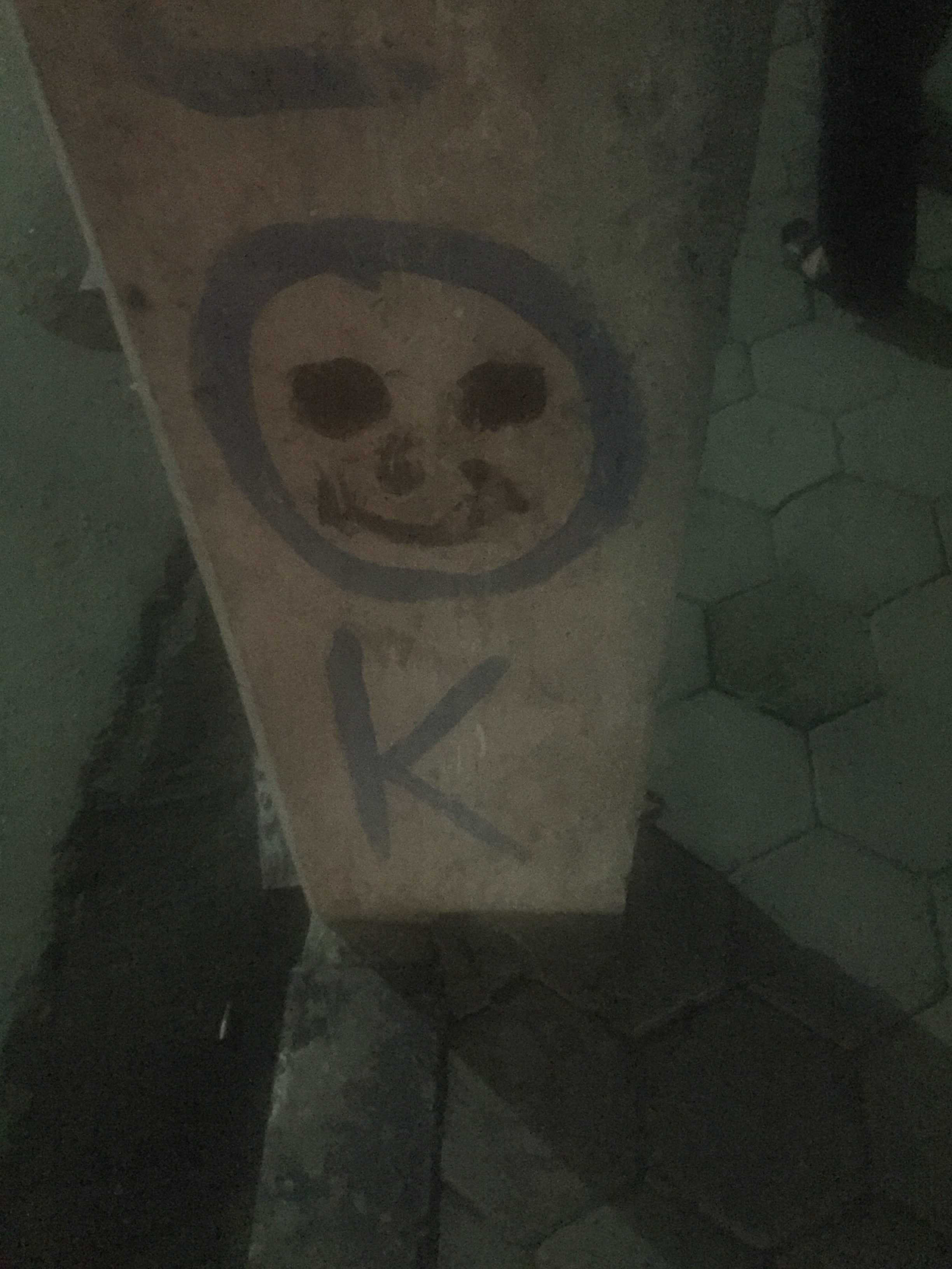
‘The ‘West-Kentucky Man Zoo’ is either a joke or a century-spanning crime. It is, as the name suggests, a place to peruse men and women in captive habitats, painstakingly constructed to resemble living rooms or office cubicles or fast-food restaurants. The ‘Zoo’ layout maintains a modicum of tact in typing exhibits by personality trait rather than physical characteristics, though it does rely heavily enough on the negative aspects of the human experience to be ‘just a little preachy.’
A photo history of the ‘West-Kentucky Man Zoo’ is available near the gift shop, revealing the establishment has been owned by the same family since its inception. Following in the founder’s bitter footsteps, each generation re-shapes the ‘Zoo’ into an overly-critical commentary of the generation that follows making this a site worth visiting once every fifty years or so.’
“Look,” I tell the guy, calling down to him 20 or so feet below, “Look, I’ve got my cell phone right here. I’m going to call the police right now if you don’t give me some sign this is an act.”
“It’s not an act, man. We’re prisoners here! You ever see any of us walking around town?”
“I’m just passing through,” I shrug nervously, “Seriously, I’m not big on the idea of calling the cops but I’ll do it if you’re actually trapped.”
“I’m actually fucking trapped! Call the damn police!”
“It says on your plaque-”
“Fuck the plaque, call the police!”
“Yeah, but it says you’re… uh… a prime specimen of millennial hysteria- a mental breakdown in an office environment. So, I mean, if this is an act…”
“It’s not an act!” he yells, prompting me to key in the numbers, “Call the police!”
“Okay,” I say, my thumb hovering over the ‘call’ icon, “If it’s not an act then how come nobody has called the police before? You’re saying I’m the only one to come through here that’s considered it? This place has been in business for decades!”
“Jesus Christ, they all do what you’re doing now! I’ve been having the same conversation with you assholes for months now. I’ve-”
“You look like you’re falling for this.” A young woman and her daughter join me at the guard rail and she smiles at the scene below, “They brought him on this year. A real pro.”
“Thank god,” I sigh, loosening my grip on the phone, “I thought I was going crazy.”
“She works for them!” the man yells up, “Fuck you, bitch. Let me out!”
“I suppose my daughter works for the zoo too?” she calls back, and the man below knocks over his rolling desk chair in a rage. “Locals get cheap season passes,” she explains, “And Sarah loves the place. I think she’s going to grow up to be an actress.”
“I’m gonna work here!” the kid chimes in with a mouthful of candy.
“Don’t you say that you little bitch!” the man from below screams, “God damn it, man, don’t listen to them!”
“Do you have a quarter, mithter?” the girl says, “I want to feed the offith man.”
“Don’t beg, honey,” the woman says, “That makes you just like the people here.”
“I don’t mind,” I tell her, searching my pockets, “I’m just happy that this… that I was confused.”
(“You’re not confused, fucker! Get me out of here!”)
“Isn’t this a little… intense for a kid?” I ask as the girl puts the quarter in a slot near the rail and turns a crank.
“Nothing worse than what she hears on the radio these days.”
A doughnut rolls out of a machine above the recessed habitat and hits the man below. He shrieks and shakes crumbs from his wispy blonde hair.
“You’re going to be okay?” the woman asks. The girl tugs at her hand, begging to move on to the next exhibit.
“Yeah,” I say, “Yeah… I just got caught up for a second.”
“You’re not the first,” she says, “The police get calls from here all the time, so if it’s going to weigh on your conscience, you might as well give it a try.”
“I’m fine,” I insist, and I pocket my phone to drive the point home.
The ‘Man-Zoo’ is not a good place for me in my current condition. I wait until they’re gone and turn to go back out the way I came but the guy calls from below.
“You still up there, man?”
I peer over the ledge and see he’s collected the broken remains of the doughnut on his desk.
“She told you to go ahead and call them, right? She told you to call the police because they get this shit all the time but they don’t, god damn it. It’s just another part of the play they’ve got. It’s called reverse psychology.”
“I know what reverse psychology is.”
“What’s the harm in calling the police? Either she’s right, and they know to expect this sort of thing, or I’m right and you’re saving a life. You’re bringing down this shithole. What’s the harm?”
“I get what you’re saying,” I tell him, feeling the vague uneasiness return, “But I really can’t get involved with the police right now.”
“Just call them and bail. They don’t need to know it’s you.”
“They can track my phone…”
“So-fucking-what? You’re the hero of this hypothetical. Just call!”
“I’ll… I’ll call from a payphone after I leave,” I tell him, backing away, “That way it’s anonymous.”
“You think I haven’t heard that?” The man’s yelling again. “You think I haven’t heard that same spineless…”
Eventually the man’s voice is too distant to make out or, possibly, he stops yelling. He sold me on the shtick, right? No need to keep up the show after I’m gone.
An actor, I tell myself.
A good actor with a job that pays him for doing what he loves.
-traveler
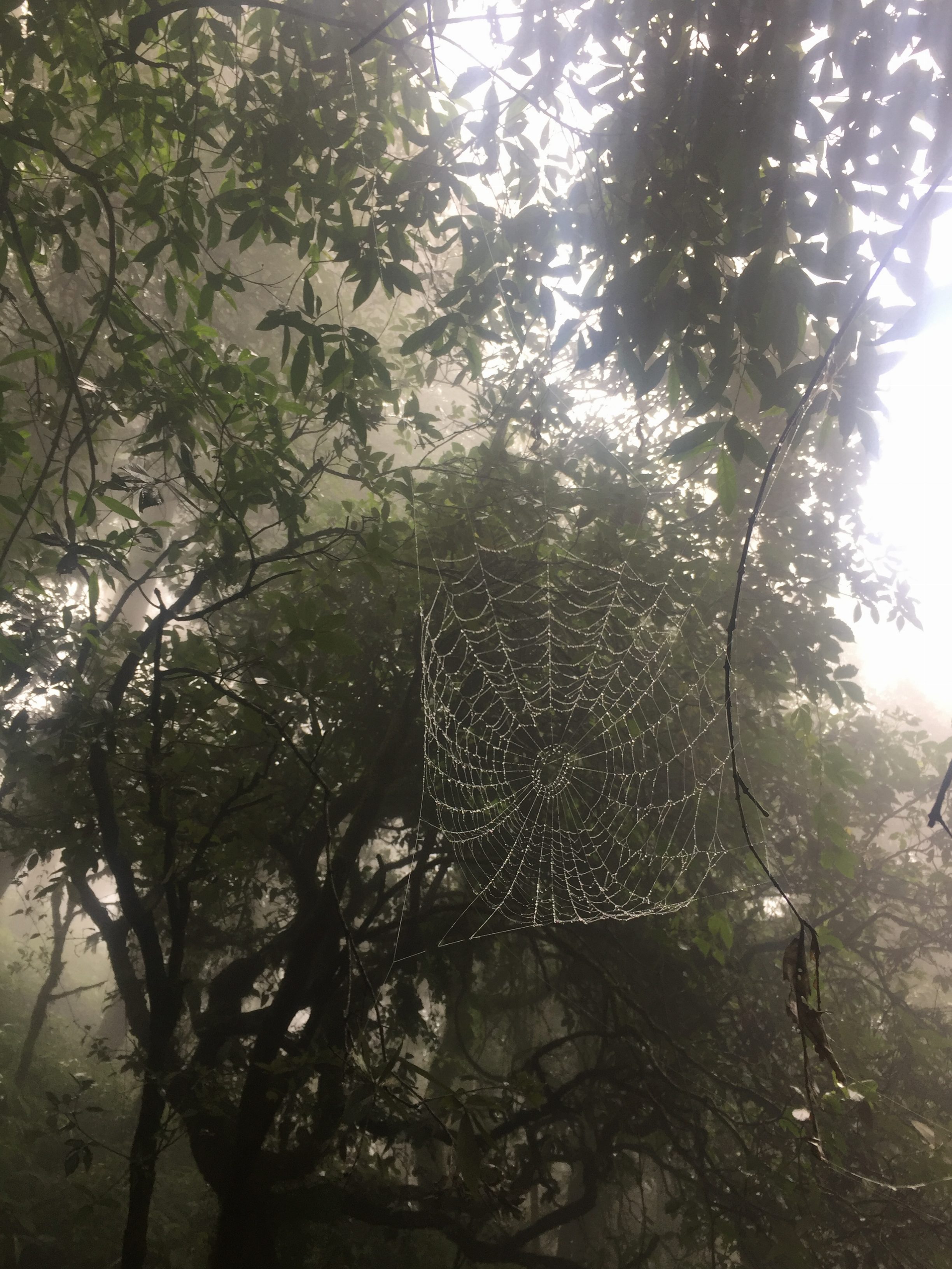
Suppose the path is a circle, like the movement-activated room at the ‘Voice Depository.’
Bear with me.
Suppose there is a place with paths, two paths or a hundred paths- it doesn’t matter. Suppose there are paths and every path is a circle and every circle is the same but bigger or smaller, depending on how it is layered. Look:
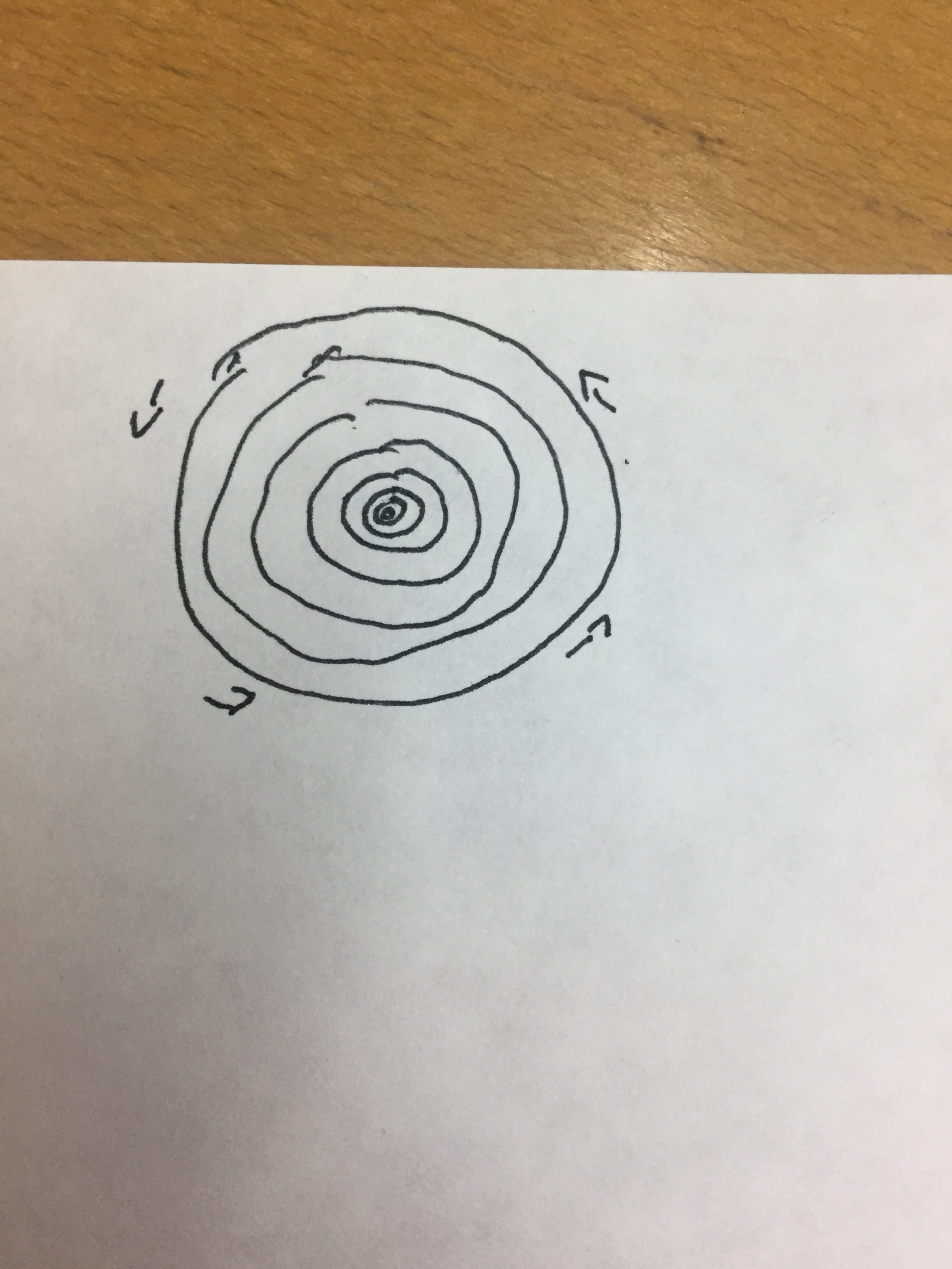
Any two people walking the same direction on any one path at the same speed will never meet, though, possibly, they will walk in each other’s shadows. And any two people, constantly in each other’s shadows, are walking on a small path which, considering the nested nature, must be nearer the center. Look:
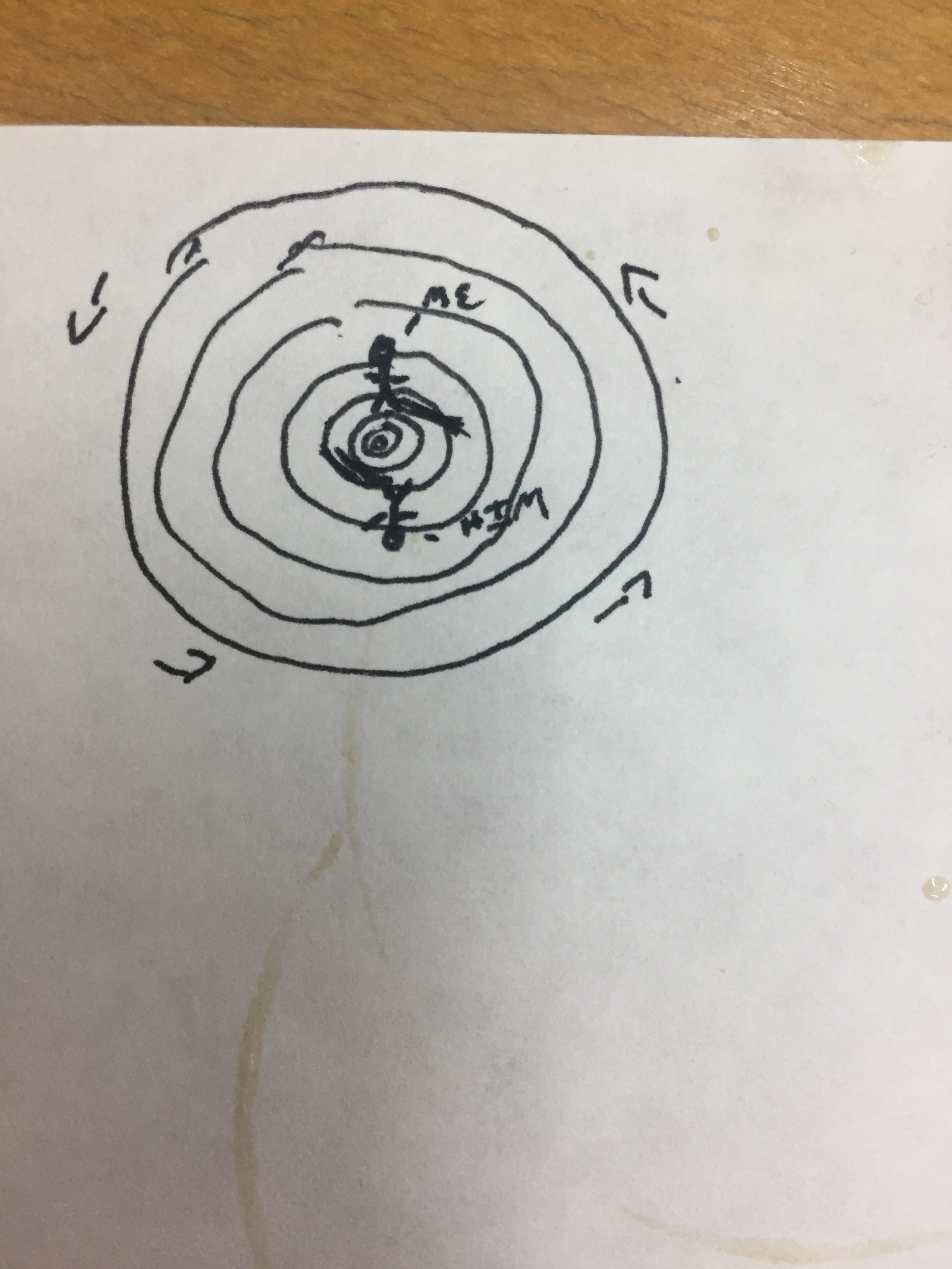
So, what are the implications of the path and the all-seeing eye? What is the implication of the center, assuming it is not simply a pit but the paths layered so thickly as to be inseparable from each other? Can it be that the stranger and I are so close to the center as to be nearly touching, or that the longer and short paths around us are so close that he has learned to move between them?
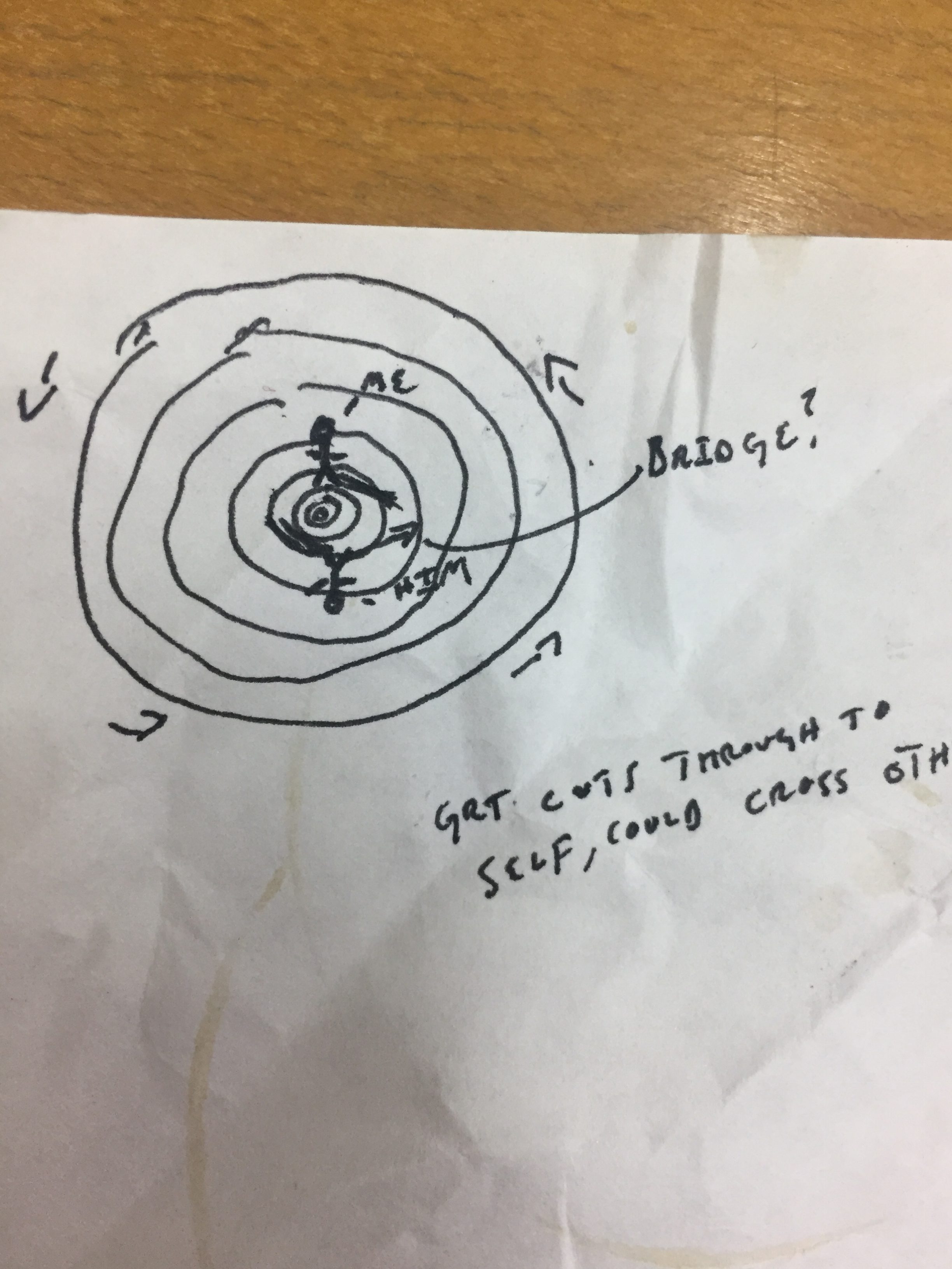
Things became strange, reader. At some point, somewhere along the way, things became strange and I wonder if that’s because I’m on a path so short in circumference that normal things have to squeeze in with their shadows just to fit. It would have to be a short path, or else the likelihood of the stranger and I running into each other…
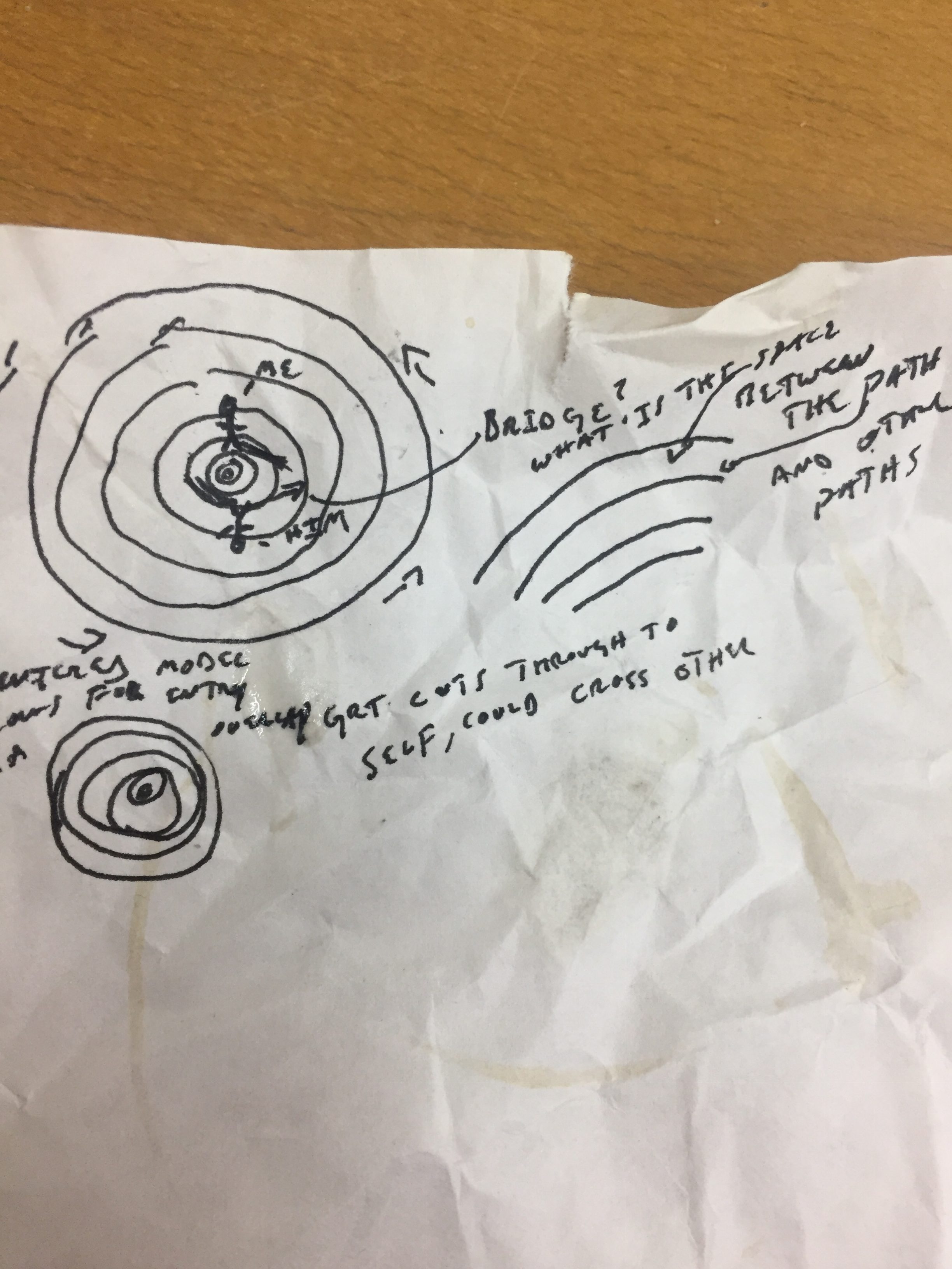
Maybe it isn’t the shortness of the circle, but the dizziness that comes from walking it over and over again. If not dizziness, then attention to detail, an understanding of nuances for having seen the same things over a hundred times. If not nuance- a runaway imagination. An unhealthy man with an unhealthy hobby.
This trip has not been good to me. It has not been healthy. Ambiguous ends do not well justify such taxing means but, now that I have started, I’m not sure how to end with any sort of grace.
It’s hard to believe there isn’t something out there- an answer, a wall, a god. The enormity of the universe, the emptiness of space, the circular nature of time, the relative silence of late evening- they all seem to suggest otherwise. ‘Sorry to disappoint,’ they say, ‘This is it.’
But it’s hard to believe them.
-traveler
© 2024 · Dylan Bach // Sun Logo - Jessica Hayworth
Recent Comments